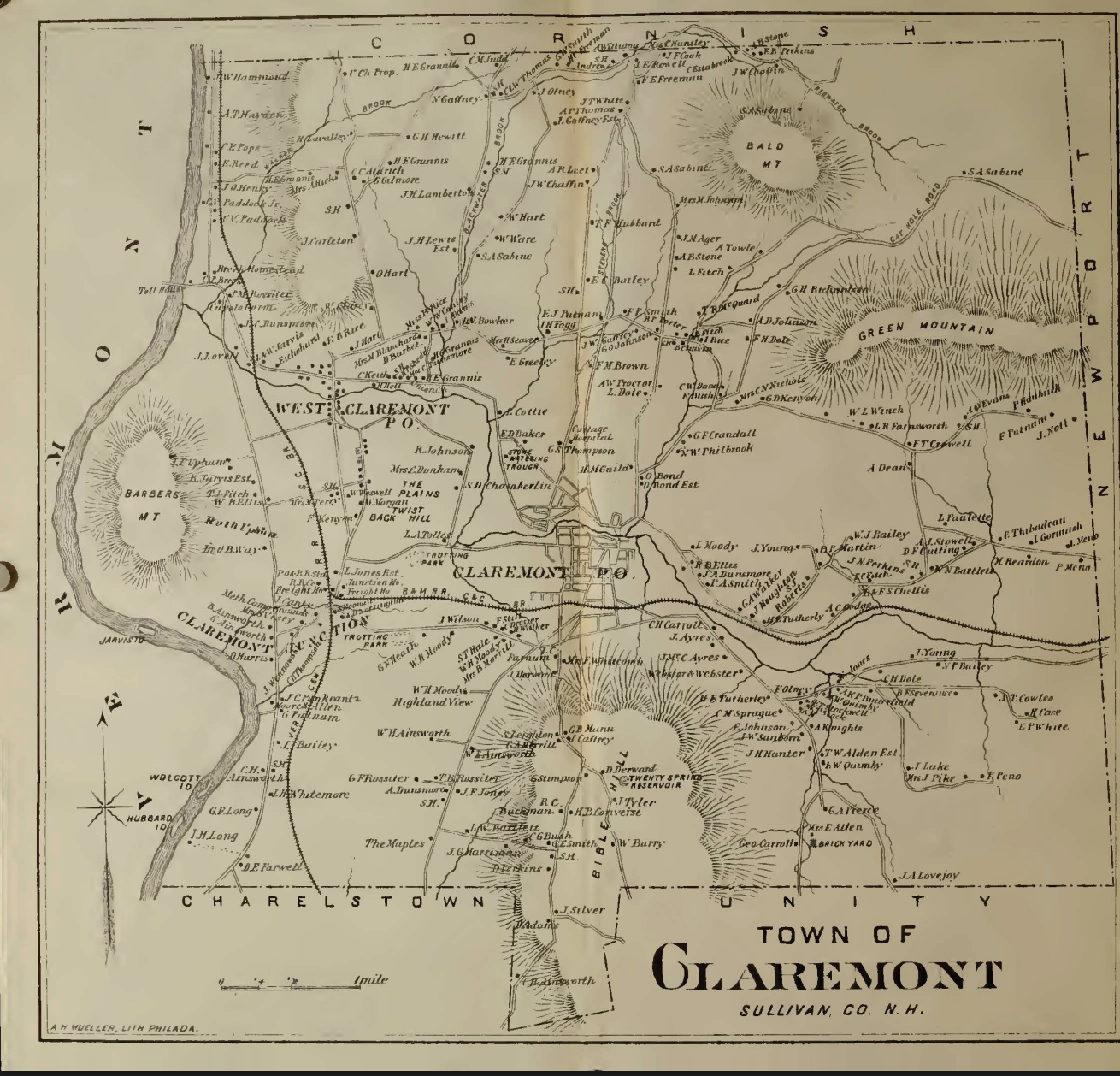
Full title: History of the Town of Claremont, New Hampshire for a Period of One Hundred and Thirty Years, From 1764 to 1894
This book is the most comprehensive history of our city written so far. At the 1892 Claremont town meeting, John S. Walker, Ira Colby, and George L. Balcom voted as a committee to authorize the writing and publication of a history of Claremont. The three gentlemen then contracted Otis F. R. Waite to research and write up the history, to be presented in August of 1895.
The author of the history, Major Otis Frederick Read Waite, was a writer, editor, printer, justice of the peace, and public intellectual who held an extensive private library in Claremont. He died shortly after the History’s publication of kidney disease in October 1895. His obituary states that Claremonters did not think he would live to see the book published, but that he rallied through to see his work come to fruition. Waite is interred at Pleasant Street Cemetery in Claremont.
Some local historians argue that Waite’s declining health in the months leading up to his death had an impact on the accuracy of some parts of the book and caution readers to corroborate what they read with other sources.
This version of the book includes some pages that are missing from other scans of the book available online. Additionally, this document is embedded with optical character recognition (OCR) technology, so the entire book is searchable.
A short report for the Claremont, N.H. Historical Society
Compiled by Rebecca Menard
To commemorate the 250th anniversary of the Declaration of Independence, here is a biography of Colonel Samuel Ashley (1720–1792), highlighting his life and the legacy he and his family left in Claremont and New England.
The Life and Legacy of Colonel Samuel Ashley
Samuel Ashley was born on March 20th, 1720 in Westfield, Massachusetts. The son of Joseph Ashley and Thankful Hawkes, Samuel direct descended from Robert Ashley, an early Puritan settler of Springfield, Massachusetts. In 1742, he married Eunice Doolittle, the daughter of Northfield’s first minister; the couple eventually raised ten children.
Early Military and Civil Leadership
Ashley acted as a seasoned leaders before the Revolution ever began. He took part in early defense of the American frontier, serving several stints at Fort Dummer between 1740 and 1749. Fort Dummer was the first permanent European settlement in what is now the state of Vermont. Additionally, Colonel Ashley was a prolific founder of New England communities. He had original land grants and acted as first selectman of Winchester, New Hampshire in 1753. He was also a grantee of Windsor and Shrewsbury, Vermont, and later Claremont, New Hampshire. By the age of 40, he stood as a wealthy landowner, militia officer, and justice of the peace.
Revolutionary War Heroism
Ashley’s most significant contributions began at age 53 when he joined the patriot cause of American Independence. Ashley served New Hampshire as both a civil servant and a military leader.
He served as a delegate to a 1771 convention in Exeter which appointed representatives to the First Continental Congress in Philadelphia. He also served as a delegate from Winchester to the Provincial Government in Portsmouth in 1774, helping to create a committee of correspondence to organize with patriots from other colonies. In 1775, he was appointed to the Committee of Safety, which was a group of influential citizens who enacted laws and ruled with the consent of the colonists, undermining the authority of the British crown.
As a military leader, Ashley was commissioned as a Colonel in 1775 and led his regiment to reinforce Ticonderoga in 1776 and 1777. In July 1777, he volunteered for General Stark’s staff as a Brigade Major and fought at the Battle of Bennington. He continued his service under General Horatio Gates until the surrender of Burgoyne. For his “spirit and expedition,” he and his troops received a formal letter of thanks from General Gates. Following the war, Ashley retired his colonelcy in 1779. In the same year, he was appointed to the Continental Congress but did not accept the appointment.
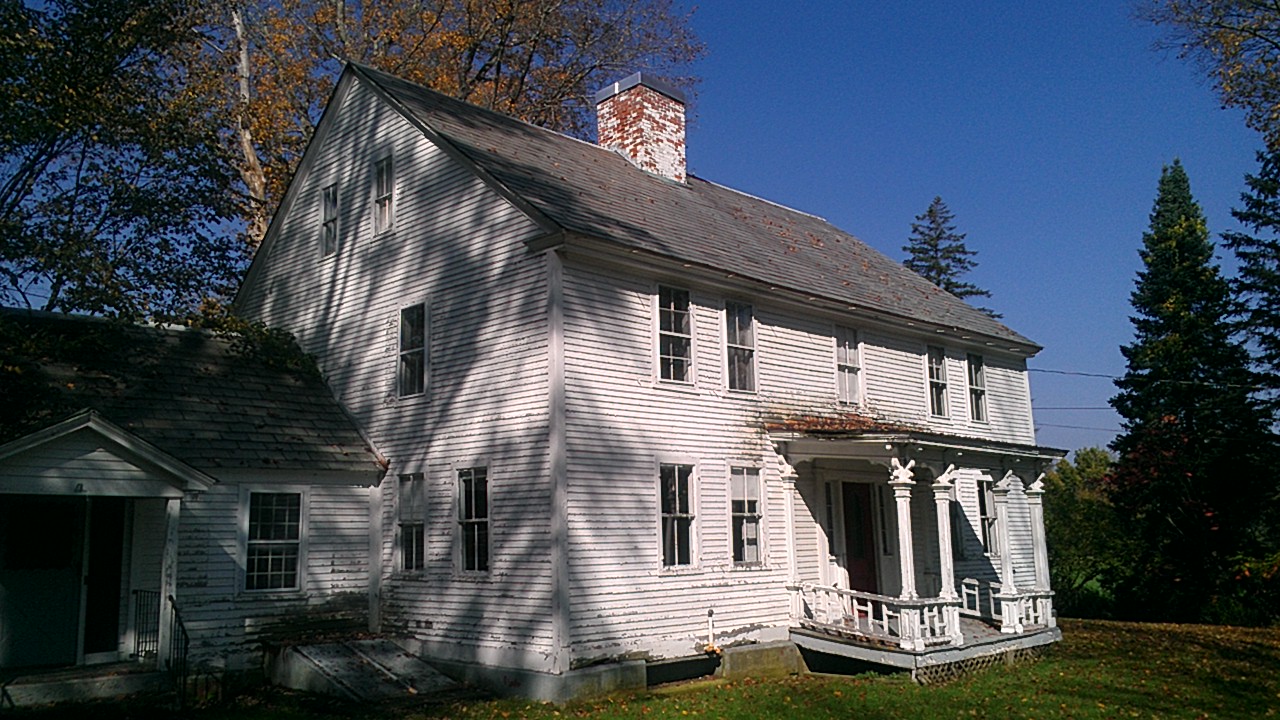
Outside of the Ashley home in Claremont
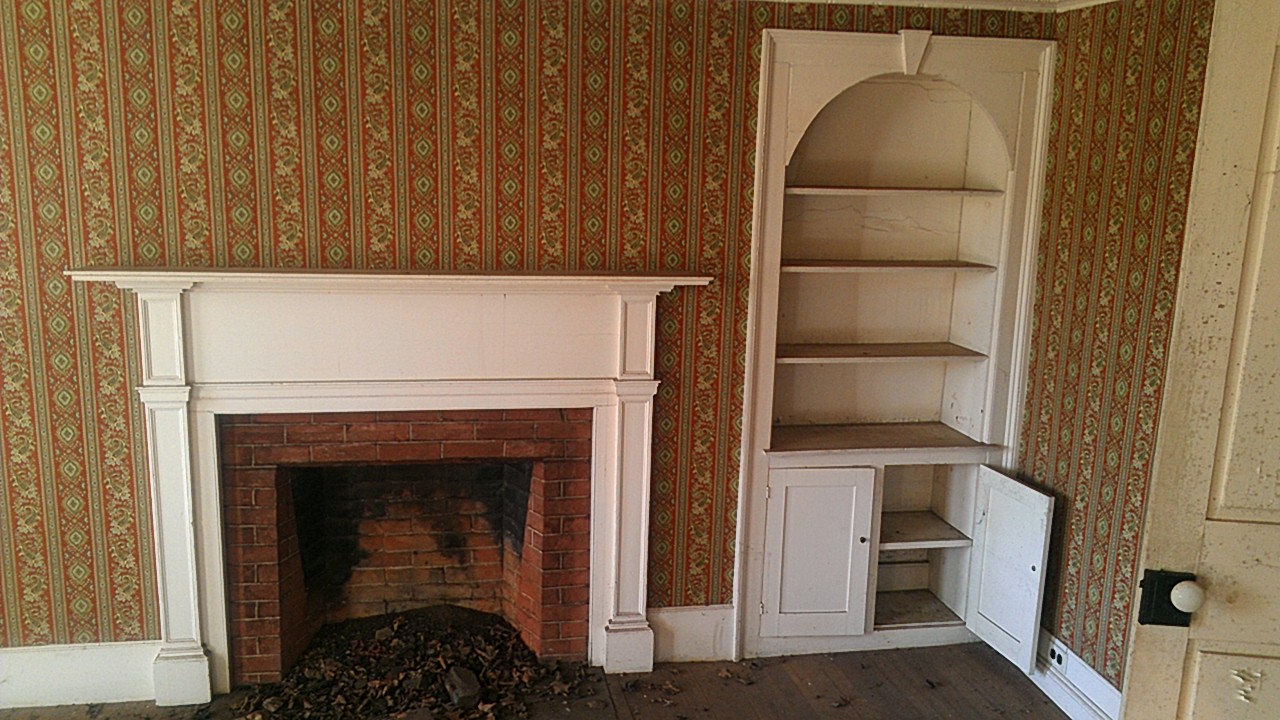
An interior view of Samuel Ashley’s Claremont home.
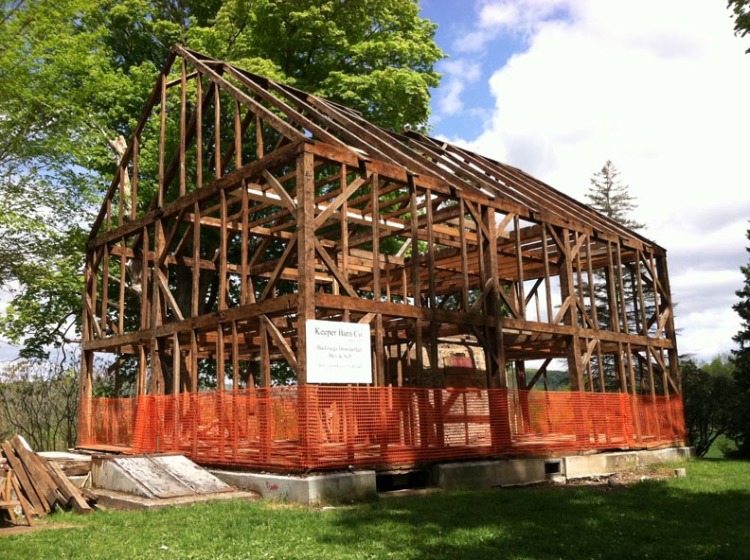
The Frame of the Ashley Home
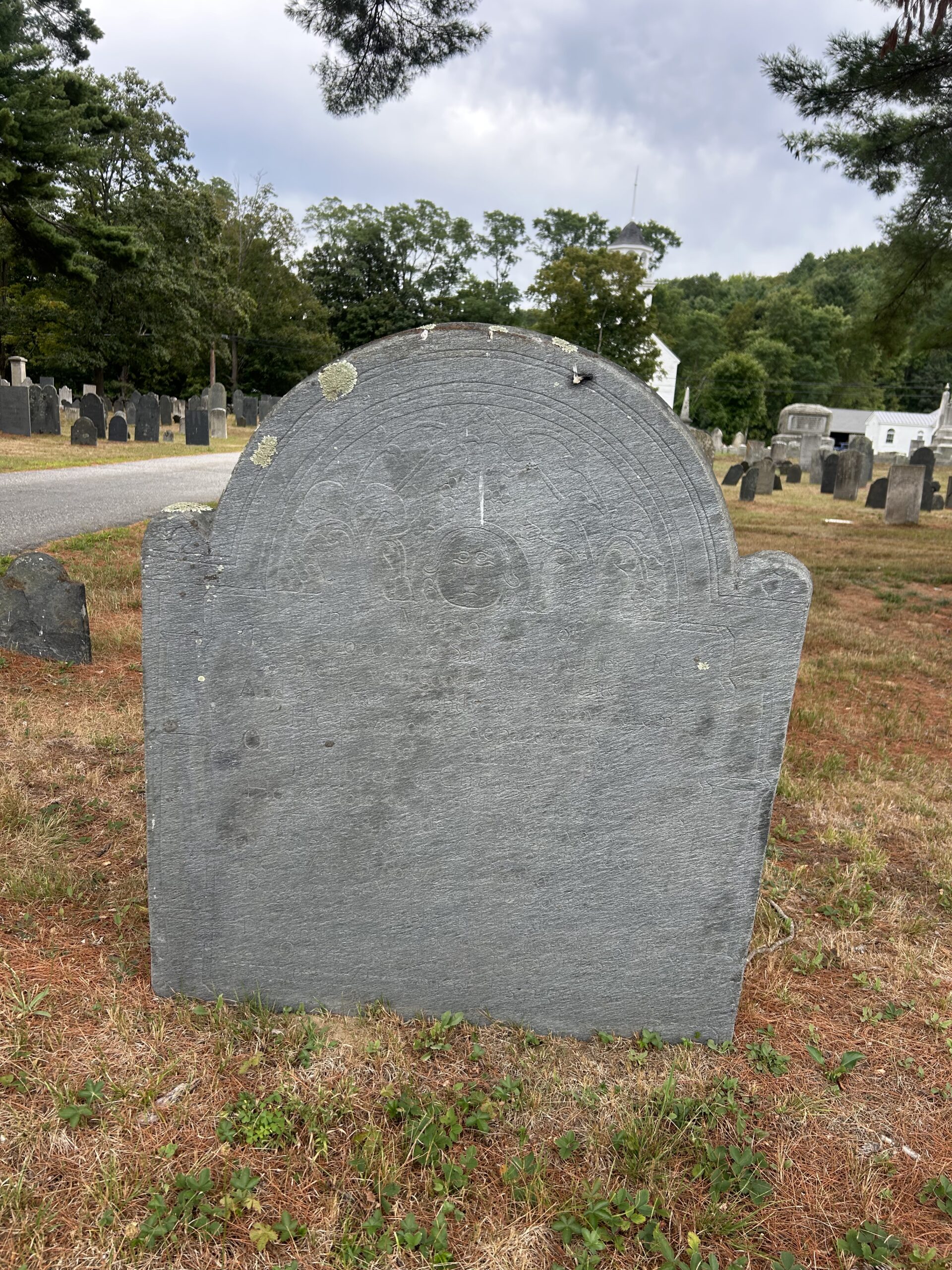
Samuel Ashley’s resting place
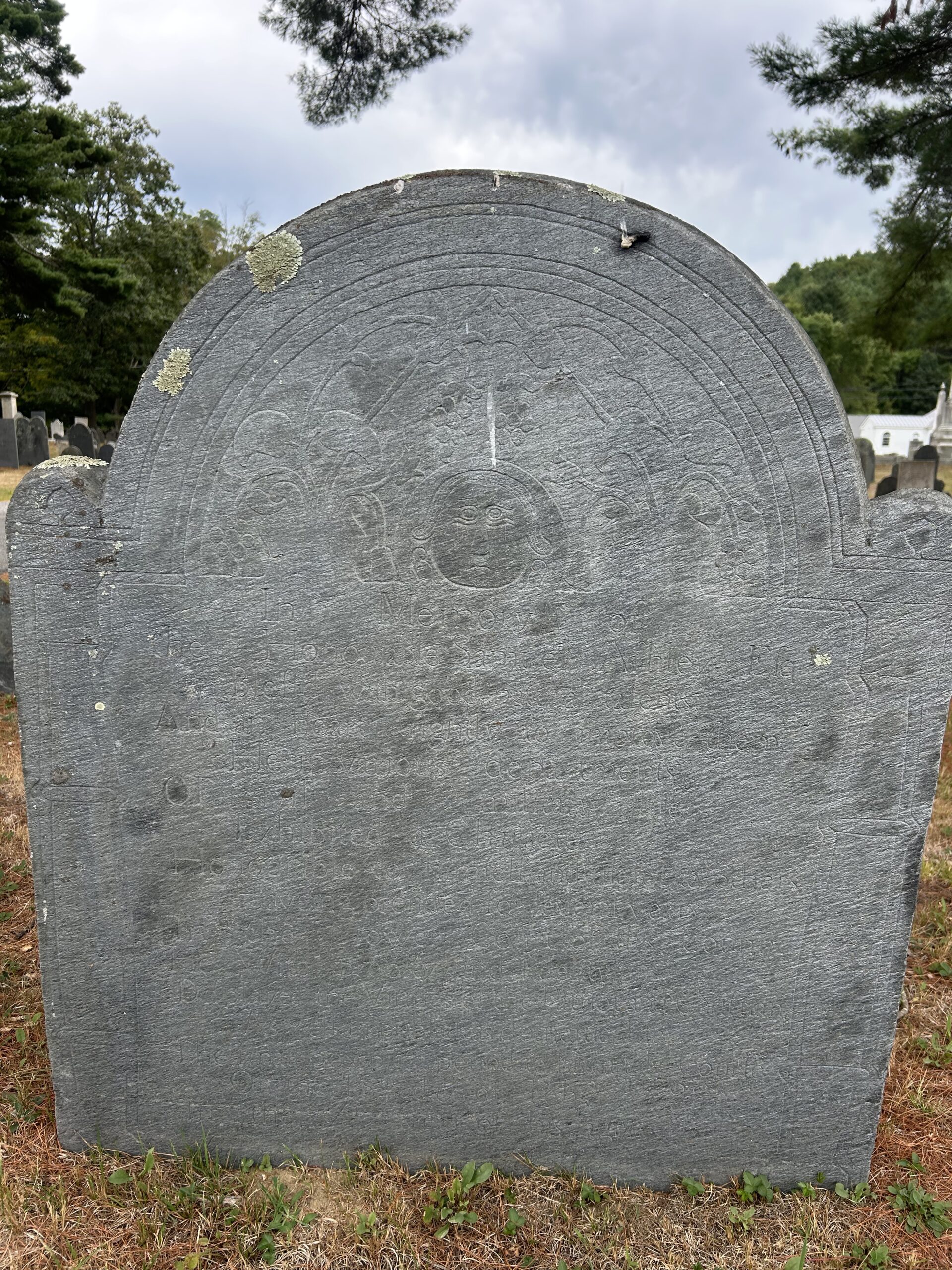
Headstone close-up
Legacy in Claremont and Beyond
After the war, Ashley’s influence shaped the early development of Claremont as we know it today. Following the Revolution, Ashley and his family possessed 22 of the town’s 75 land shares. This tract was laid out in 1784, with its boundary known as Ashley’s Line,” running from Ashley’s ferry landing along the Connecticut River to the Newport town line. An early map of the area now known as the Twin State Valley, Claremont is labelled as “Ashley”, a reference to the Colonel’s founding influence. Out of all 69 original grantees of Claremont, only 3 grantees came to live in the town and Samuel Ashley was one of them. The Colonel’s former home along the Connecticut River in Claremont was dismantled and the heritage building materials reclaimed by Keeper Barn, based out of Vershire, VT, in 2012.
At the time of its founding, Claremont was part of Cheshire county; Sullivan county did not exist until July 5, 1827. The colonel served as an associate and later chief justice of the Court of Common Pleas for Cheshire County until 1791. His sons also became prominent leaders. His son Oliver established a ferry across the Connecticut River and served as a Captain during the war. Another son, Samuel Jr., rose to the rank of Colonel in the New Hampshire Militia.
Colonel Samuel Ashley died of smallpox on February 18, 1792, and is buried in Union Cemetery in West Claremont. In his will, he left funds to support the Union Church (Episcopal) in West Claremont. His monument describes him as a man of “probity and fidelity” who displayed “the virtues of the patriot and Christian”.
The Claremont Chapter of the Daughters of the American Revolution was named for Samuel Ashley.
References
BASCOM, R. O., & Holden, J. A. (1910). THE TICONDEROGA EXPEDITION OF 1775. Proceedings of the New York State Historical Association, 9, 303–389. JSTOR. https://doi.org/10.2307/42889435
COL Samuel Ashley (1720-1792) – Find a Grave… (2020). Findagrave.com. https://www.findagrave.com/memorial/33084192/samuel-ashley
Keeper Barn (2019). https://www.keeperbarn.com/#/waite-house-claremont-nh/
Trowbridge, F. B. (1896) History Of The Descendants Of Robert Ashley Of Springfield, Massachusetts. Tuttle, Morehouse & Taylor.
New Hampshire is more interesting than you think, and you can learn more on Instagram.
“Somewhere on a desert highway
She rides a Harley-Davidson
Her long blonde hair flyin’ in the wind
She’s been runnin’ half of her life
The Chrome and steel she rides
Collidin’ with the very air she breathes
The air she breathes”
– “Unknown Legend”, Neil Young
Released in 1992, the song “Unknown Legend” could not have come at a more pivotal time in my life. That was the year I would enter the world as an adult. I got my first tattoo, graduated from Stevens High School the next day, and began a lifetime of working in education. I had always wanted to have my blonde hair flyin’ in the wind on my own motorcycle; My love of history began in eighth grade at Talbert Middle School in Ms. Reed’s U.S. History class and has never abated over the years. Since 1992, I have learned to ride a motorcycle and have done so all over New Hampshire and Vermont.
I have loved traveling even longer than I’ve loved history. Almost every summer of my childhood, my Bammie and Grampa would pack us in the station wagon and bring my sister and me somewhere, usually the White Mountains. I loved it so much that I eventually made a sign for the tailgate of the station wagon that said “Walley World,” after the fictional theme park destination in National Lampoon’s Vacation. My sis and I would sit in the reverse back seat, waving to the passers by who “got it.” I’ve always liked making people laugh.
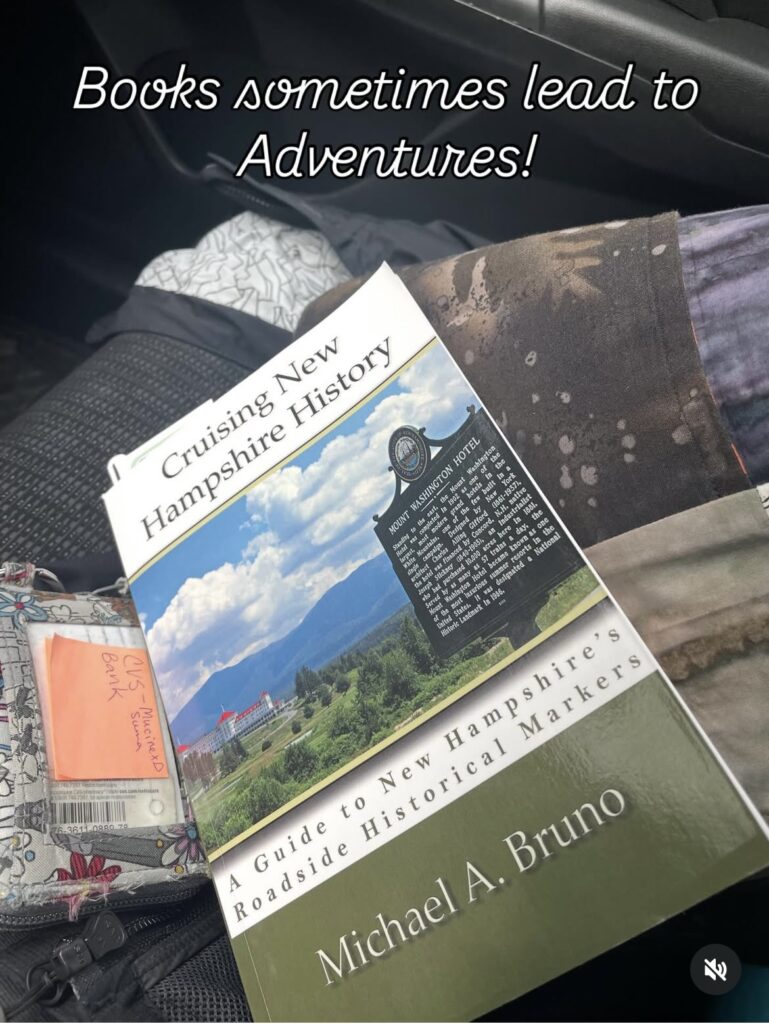
Fast forward to April break, 2025: I have taught at six schools (excluding my two stints in daycare centers) and to hundreds of students. While on break in April, I was vacationing in the White Mountains again and I happened upon the White Birch Book Store in Conway. In this great little bookstore, I found a copy of Cruising New Hampshire History by Michael A. Bruno.
Since my childhood, I have always looked for places to go, things to see, and quests! In my mid-30s, I started keeping track of all the major roads I traveled on via my motorcycle in New Hampshire and Vermont. I finished New Hampshire a few years ago. Don’t worry, Vermont, I’ll finish someday! Then my sister Jen and nephew Dylan came for a visit from California in 2021, and we stayed at the Eagle Mountain Resort. I wondered, how many grand hotels are left in New Hampshire? It’s four, by the way… Challenge accepted! Yes, I have now stayed at all the remaining grand hotels in New Hampshire (and figured out ways not to pay the usual high rates). So, when I started reading Bruno’s book on discovering New Hampshire state markers, I thought why not?
Bruno’s book. You can purchase your copy directly from the author here.
As I started finding markers, I thought about how many of my students think we live in a small, boring state; they are wrong. I also lamented that many have not and will not travel much in their lives. This was proven when I took a class up the Cog Railway to the top of Mount Washington; probably less than 1/2 a dozen had been to Mount Washington, and many had not been to the White Mountains. Over the summer, I started thinking about creating an Instagram page to show kids of all ages how cool our state is and how important it is to travel as a way to discover local history and culture. Being a long-in-the-tooth teacher was getting in my way, and I put my Instagram idea on the back burner.
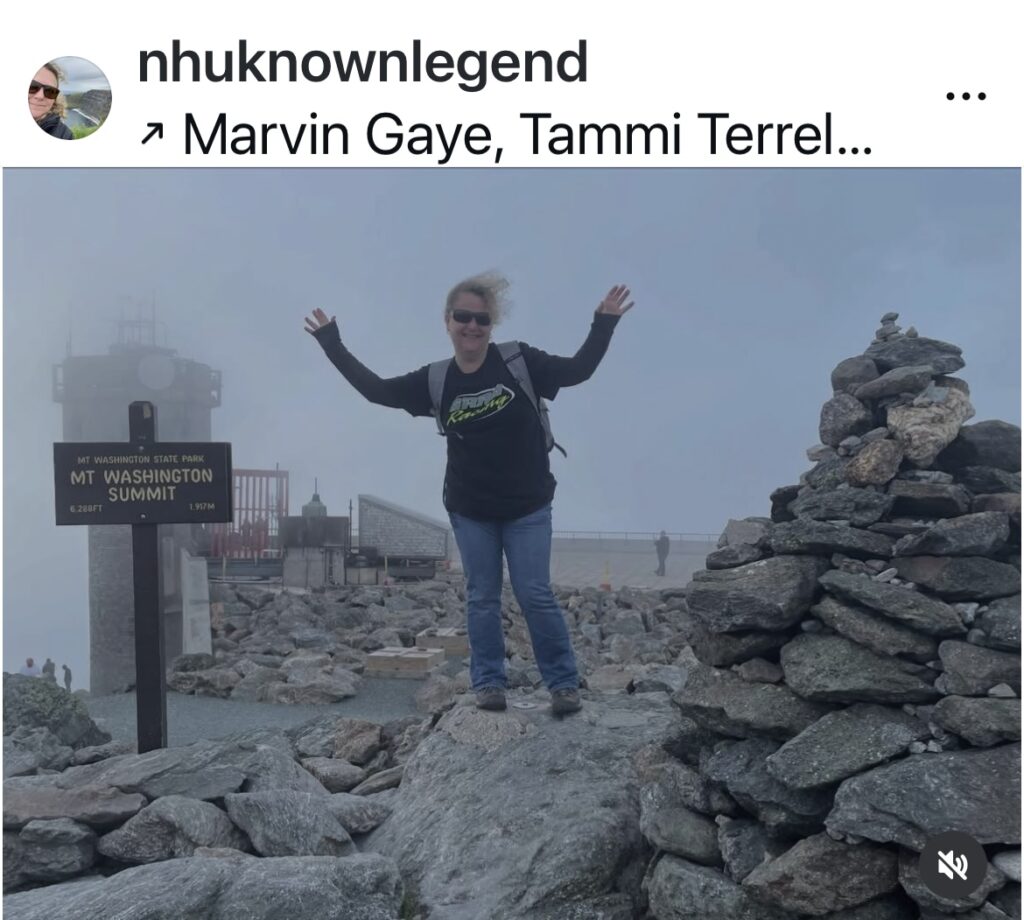
Jill at the top of Mount Washington last summer for the Sunset Drive on the Auto Road.
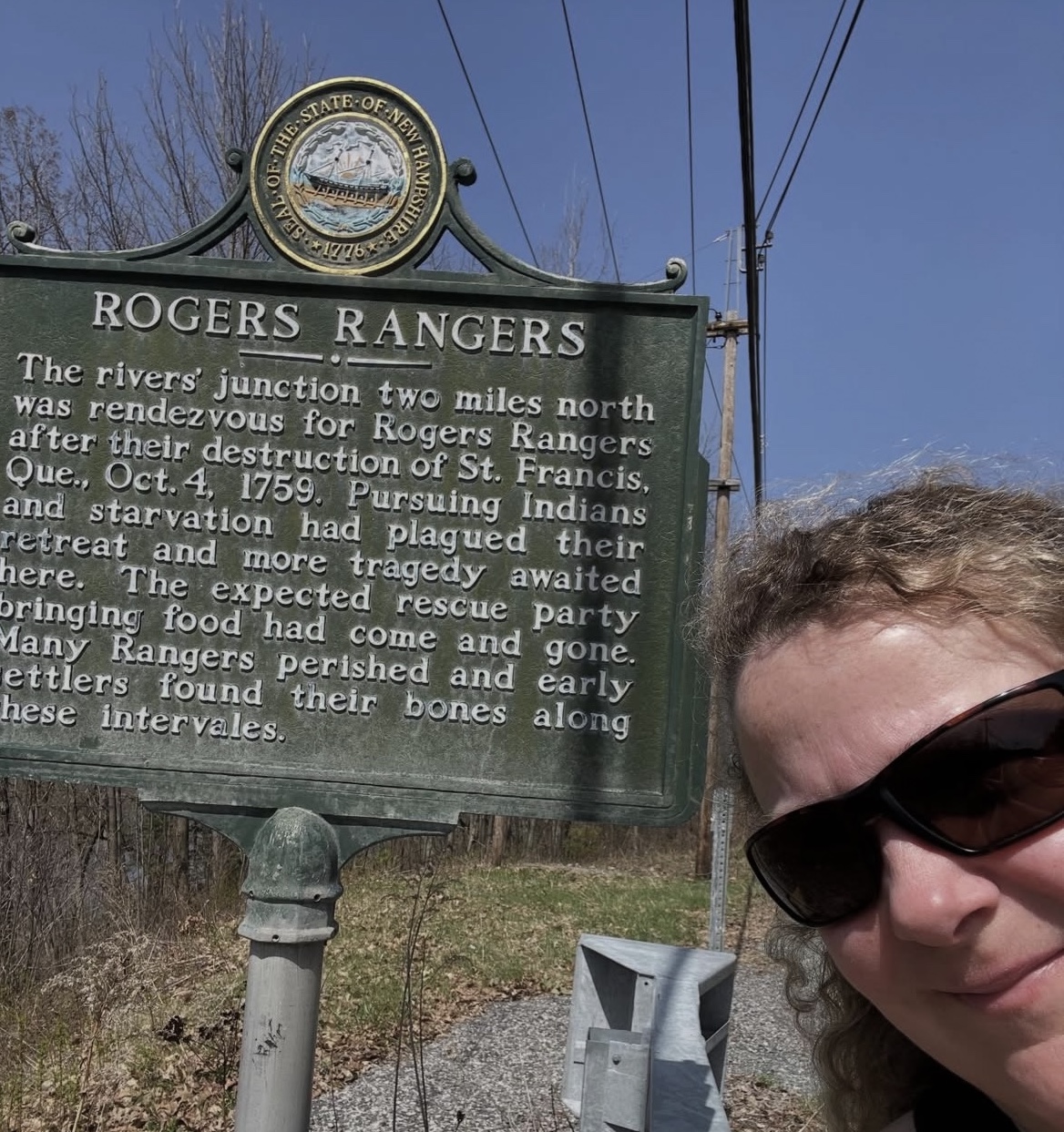
In December 2025, I started a new job at Dartmouth College. My energy slowly returned, and the Instagram idea kept nagging at my brain. Finally, on New Year’s Eve, I made my first official post to @NHUnkownLegend. On it, you will find my escapades hunting State Markers, past trips, and I anticipate sharing some tips to show my students, err… followers, that you don’t need a lot of money or fancy gear to travel.
Already, I have posted state markers from the White Mountains to Londonderry. My first reel of the beautiful dogs at Muddy Paws Dog Sledding in Jefferson is the first of what I hope will be many. Next, I need to overcome my fear of being in FRONT of the camera. You can find photos of my 2006 trip to Japan, my 2024 trip to California for Christmas, and my most recent trip to the White Mountains.
In the future, I foresee the possibility of including some good places to eat because we all need food. Someday soon, I’ll even post the state markers for Claremont! So please follow me on Instagram, where the photos are plentiful, and encourage your friends to do the same!
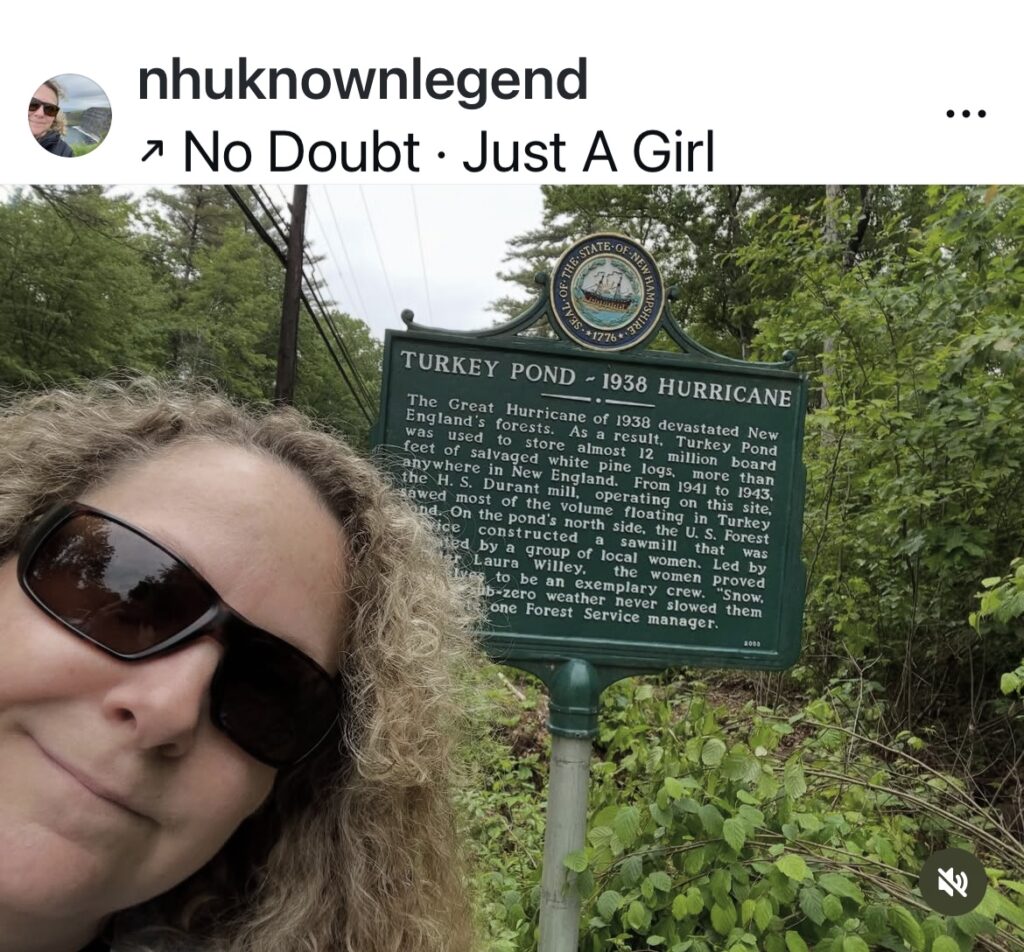
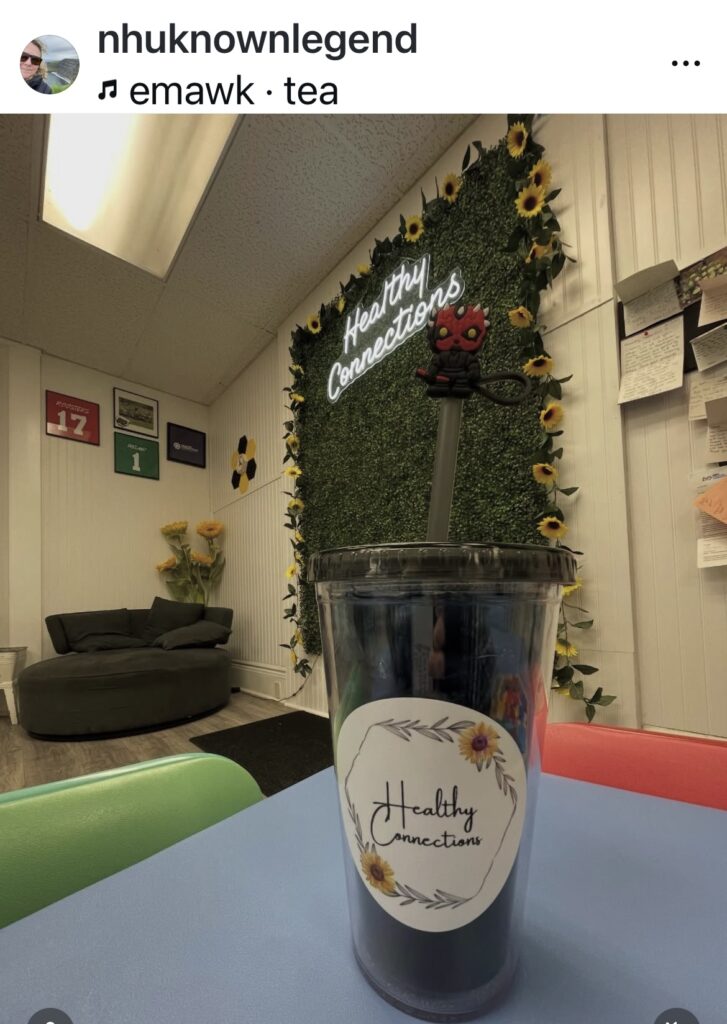
Turkey Pond, where women ran a logging mill during the Great Depression.Healthy Connections in Claremont – one of Jill’s favorite spots in town!
Thank you Jill for sharing your writing with us! If you would like to share a member highlight, contact us with your musings, pitches, and drafts. We love supporting local historians and sustainers of local cultural folkways.
The Claremont Historical Society Board of Trustees
In July of 2025, Lois Buchan completed her extensive research volume on Pleasant Street Cemetery and donated both a physical and digital copy of the book to the Claremont History Museum. Lois is a second-generation Claremonter, as well as a member of both the Claremont American Band and the Claremont NH Historical Society. Growing up in Claremont across the street from the Cemetery was part of what spurred her research interest.
Her publication is the culmination of years of digging through records and archives to organize the cemetery into an easily searchable format; It is the first volume to comprehensively cover the Pleasant Street Cemetery all the way back to its first burials in 1846. In her research, Lois partnered with the Claremont Department of Public Works to obtain the records of the first two sextons of the cemetery, father and son duo Alfred and George H. Burrill.
The book includes an explanation of Mrs. Buchan’s research methods, a map of the cemetery, a plot chart, and biographical data about the men, women, and children interred at the Pleasant Street Cemetery. The digital document, which is available on the CHS website, is searchable and ideal for local history and genealogical research.
The Claremont Historical Society expresses heartfelt gratitude toward Lois for her contribution to local history research. We are always accepting new pieces of research to public online or to use in our museum – become a member or contact us today to learn more.
The Claremont Historical Society Board of Trustees
To provide the best experiences, we use technologies like cookies to store and/or access device information. Consenting to these technologies will allow us to process data such as browsing behavior or unique IDs on this site. Not consenting or withdrawing consent, may adversely affect certain features and functions.
Functional
Always active
The technical storage or access is strictly necessary for the legitimate purpose of enabling the use of a specific service explicitly requested by the subscriber or user, or for the sole purpose of carrying out the transmission of a communication over an electronic communications network.
Preferences
The technical storage or access is necessary for the legitimate purpose of storing preferences that are not requested by the subscriber or user.
Statistics
The technical storage or access that is used exclusively for statistical purposes.The technical storage or access that is used exclusively for anonymous statistical purposes. Without a subpoena, voluntary compliance on the part of your Internet Service Provider, or additional records from a third party, information stored or retrieved for this purpose alone cannot usually be used to identify you.
Marketing
The technical storage or access is required to create user profiles to send advertising, or to track the user on a website or across several websites for similar marketing purposes.